

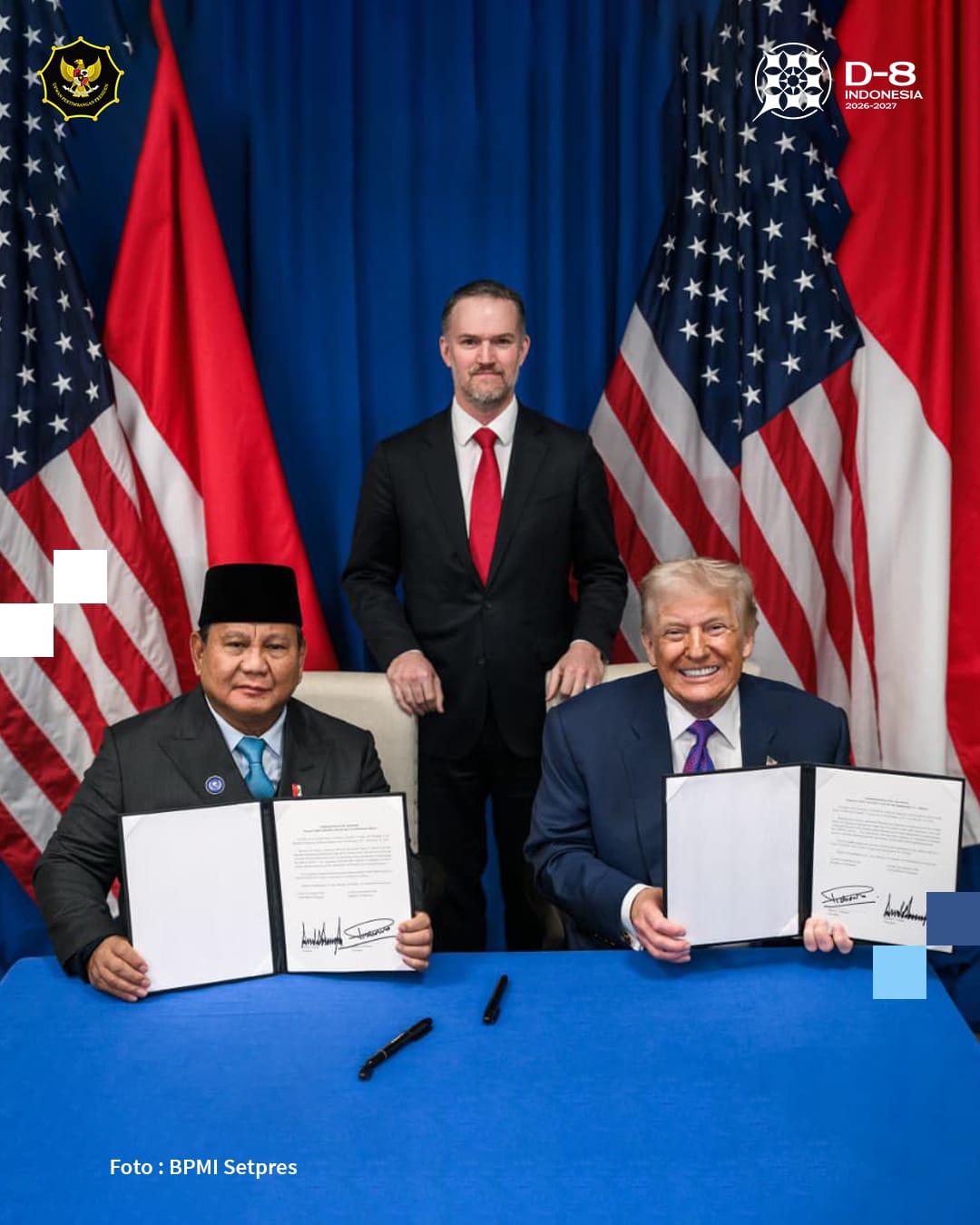
The Government of the Republic of Indonesia and the Government of the United States have reached a Reciprocal Trade Agreement entitled “Toward a New Golden Age for the US–Indonesia Alliance.” The agreement was signed by the two Heads of State in the United States and marks an important milestone in strengthening mutually beneficial bilateral economic relations.
As part of the implementation of the agreement, a Council of Trade and Investment has been established as an official forum to discuss and coordinate trade and investment issues, as well as to sustainably address the balance of trade between Indonesia and the United States.
Under this agreement, a total of 1,819 Indonesian tariff lines will receive zero-percent tariff treatment in the United States market. These facilities cover a wide range of agricultural and industrial products, including palm oil, coffee, cocoa, spices, rubber, electronic components including semiconductors, and aircraft components. Indonesian textile and apparel products will also benefit from zero tariffs through a tariff rate quota (TRQ) mechanism. This policy is projected to benefit approximately four million workers and positively impact around 20 million Indonesians.
On the other hand, Indonesia will grant zero-percent tariffs on several United States agricultural products, such as wheat and soybeans, in order to maintain the stability of raw material supply, reduce production costs, and support domestic processing industries and the downstream development of national strategic industries.
In the digital economy sector, both countries have agreed not to impose customs duties on electronic transmissions and to support a permanent moratorium on customs duties on electronic transmissions within the World Trade Organization. Indonesia also promotes limited cross-border data transfers in accordance with national laws and regulations, while ensuring the protection of consumer data.
The Reciprocal Trade Agreement will enter into force 90 days after the completion of all required legal processes in both countries, including consultations between the Government of Indonesia and the House of Representatives (DPR RI), and may be adjusted based on mutual written agreement.